Short answer: the biggest source of DESIGN.md examples is VoltAgent's awesome-design-md on GitHub, with 84 files analysed from developer-focused websites (also on getdesign.md), and the shortest is the Heritage example in Google's specification. We measured six real files: the collection's run from 488 to 822 lines, every one defines a primary colour and keeps the spec's section order, and most of their length is component tokens. A DESIGN.md is a markdown file that gives AI agents a design system: exact values up top, the reasons for them below.
Key takeaways
- Collections: awesome-design-md (84 files, about 129,000 GitHub stars on November 24, 2026), awesome-claude-design (68), awesome-ios-design-md (200), awesome-design-skills (67 DESIGN.md and SKILL.md files) and a Japanese collection.
- The collection's files are analyses and “inspired interpretations” of brands, not the companies' own design systems.
- The five we measured define 20 to 47 colours, 13 to 17 type styles and 15 to 50 components, with 60 to 202 token references and none broken. None uses motion tokens.
- They are long: 24,000 to 41,000 characters. Imported into a CLAUDE.md, a file like that loads in full every session; the largest is also over the 40,000-character limit Claude Code puts on files it loads on demand.
- Through Kite's import and export, all 245 colour, radius and spacing values and all 76 type styles came back intact; token names gained a prefix and components moved into prose.
Every outside fact below was read on its source on November 24, 2026, unless it says otherwise, and is linked where it is stated. We make Kite (kite.new), a design tool that reads and writes DESIGN.md files, so it is the design tool in our round-trip test.
Where can you find DESIGN.md examples?
Google introduced DESIGN.md with Stitch in March 2026 as “an agent-friendly markdown file” to export or import design rules (Google, read November 20), and published the draft spec on GitHub (google-labs-code/design.md). Within months the community had built collections of ready-made files:
| Collection | What's in it | Files | GitHub stars, Nov 24 |
|---|---|---|---|
| Google's spec | The format, a command-line tool, and one short example (Heritage) | 1 | not read |
| awesome-design-md (getdesign.md) | DESIGN.md analyses of developer-focused websites: AI labs, dev tools, databases, SaaS, design tools; requests on getdesign.md | 84 | 128,892 |
| awesome-claude-design | “Design system inspirations in DESIGN.md format” for Claude Design | 68 | 4,684 |
| awesome-design-skills | DESIGN.md and SKILL.md files for agents such as Claude Design, Stitch, Codex and Cursor | 67 | 3,792 |
| awesome-design-md-jp | Japanese interfaces, extending the format with CJK typography | not counted | 1,024 |
| awesome-ios-design-md | App design systems, framework-neutral plus SwiftUI, Jetpack Compose and Expo | 200 | 654 |
File counts are each collection's own; stars are GitHub's count on November 24, 2026. Read the files as starting points: the largest collection calls them analyses of websites, and several of its files describe themselves as “an inspired interpretation” of a brand.
What's inside six real DESIGN.md files?
We took Google's Heritage example and five files from awesome-design-md (the Claude, Linear, Notion, Stripe and Vercel analyses) and counted what each defines in its tokens:
| File | Lines | Colours | Type styles | Radii / spacing | Components | Token references |
|---|---|---|---|---|---|---|
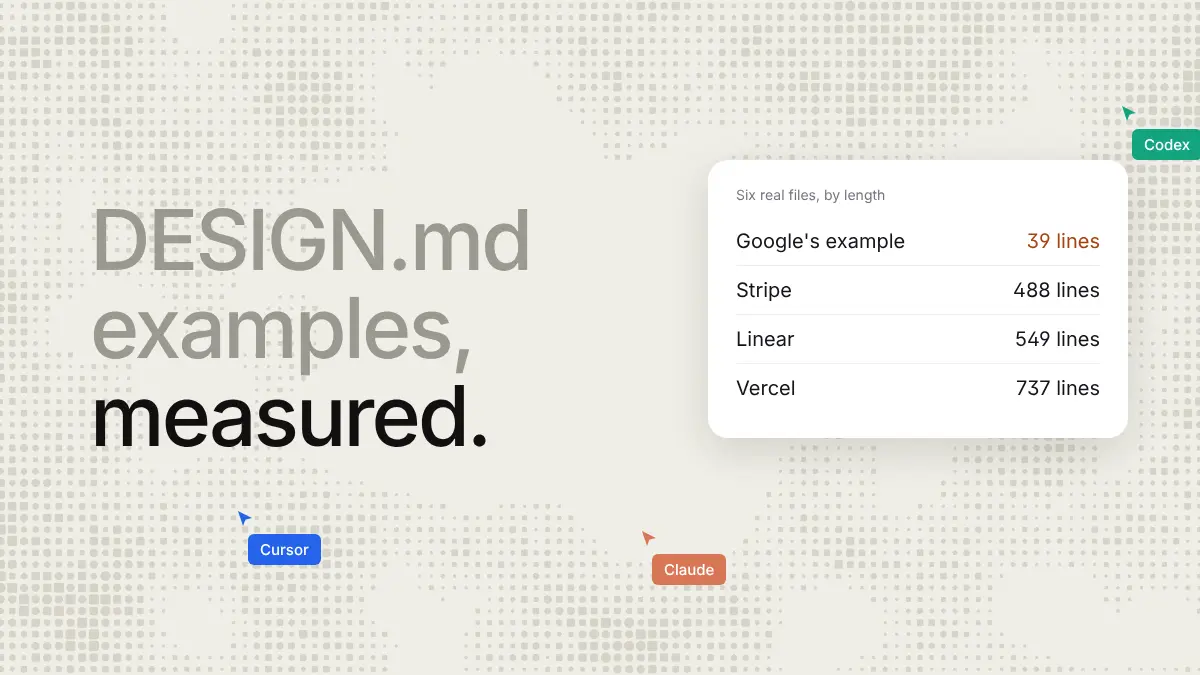
| Heritage (Google's example) | 39 | 4 | 3 | 2 / 2 | 0 | 0 |
| Claude | 590 | 25 | 14 | 7 / 8 | 29 | 103 |
| Linear | 549 | 23 | 13 | 8 / 8 | 21 | 84 |
| Notion | 822 | 47 | 17 | 8 / 12 | 50 | 202 |
| Stripe | 488 | 20 | 15 | 6 / 8 | 15 | 60 |
| Vercel | 737 | 36 | 14 | 9 / 12 | 40 | 193 |
A token reference is a value that points at another token, such as a button's background set to {colors.primary}, so changing the colour once changes every component that uses it.
What do the files have in common?
- They follow the spec closely. All five collection files declare
version: alpha, define a colour namedprimary(the spec warns when there isn't one, since agents will then invent one), keep their recognised sections in the spec's order, and have no broken token references. - Components are most of the tokens. 155 components across the five files, each with its colours, type, corners and padding. That's what lets an agent build a button or card that matches, not just pick the right colours.
- No motion. The spec has motion tokens (duration, delay, easing), but none of the five uses them, so animation is left to the agent.
- They are long. 24,000 to 41,000 characters each. The prose explains when to use each colour and what never to do, which is what makes the files useful, and also what makes them expensive to keep in an agent's context.
How do you use a DESIGN.md with your agent?
- Put it in your project as
DESIGN.md, beside your code. Stitch imports and exports the format, and coding agents read it like any other file. - Make it yours. Replace the brand's colours, fonts and rules with your own; a collection file is a starting point.
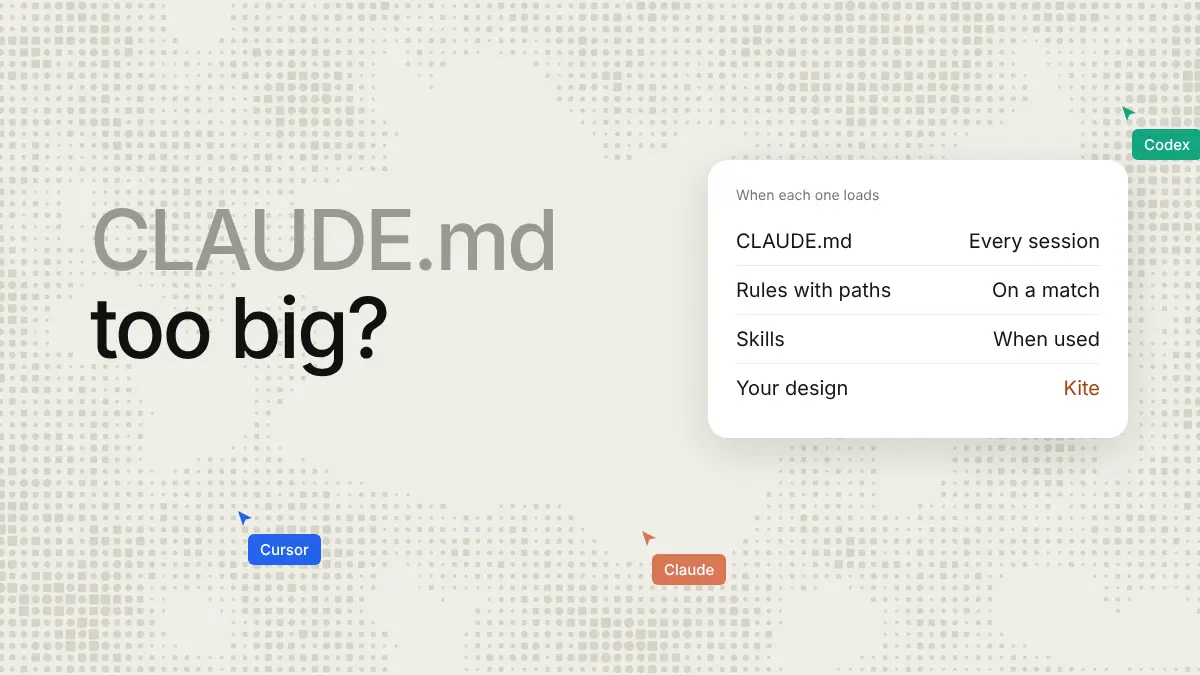
- Don't @import it into CLAUDE.md. An imported file loads in full with the CLAUDE.md that imports it, every session (Claude Code docs). At 24,000 to 41,000 characters, that's a lot of context for every task, including ones that have nothing to do with the interface.
- Load it only for interface work. Point to it from a path-scoped rule that matches your UI folders, or wrap it in a skill. Note that Claude Code cuts files it loads on demand at 40,000 characters on a 200K context window, so a file the size of the Vercel one would arrive truncated; split it. Our guide CLAUDE.md too big? covers both.
- Check it. Google's
npx @google/design.md lint DESIGN.mdreports broken references, a missing primary colour, contrast below WCAG AA (4.5:1) and sections out of order (spec).
What happens when you bring one into a design tool?
A DESIGN.md is a file; a design tool turns it into variables, text styles and rules that people and agents use on a board. We ran all six files through Kite's own importer and exporter, the code behind Kite's DESIGN.md import and download, and compared what came back:
- Kept: every value. All 245 colours, radii and spacings, and all 76 type styles with their family, size, weight, line height and tracking, came back unchanged. Each file took 1 to 29 milliseconds.
- Renamed: every token gains a prefix in the export (
primarybecomescolor-primary,smbecomesradius-sm), so a reference like{colors.primary}written elsewhere no longer matches. - Moved: the 155 components leave the YAML and come back as a skill named “Component tokens”, in plain words an agent reads, with the prose becoming a second skill, the file's guide.
- One slip: Google's example has no description, and its export took the first heading, “Overview”, as one.
So in Kite a DESIGN.md becomes a working design system, its values exact, its rules as skills agents read only when a task needs them. Going back out, expect renamed tokens and components in prose until the export keeps the spec's names. To make one from scratch, Kite builds a design system from a website, from CSS or from a frame you've drawn (design systems).
How do you write your own DESIGN.md?
The spec is short. What a file holds, in the order it gives (Google):
- Tokens up top, as YAML between
---lines:colors(any CSS colour),typography(family, size, weight, line height, tracking),rounded,spacing,motionandcomponents. The tokens are the exact values. - Prose below, in
##sections in this order, any of which can be left out: Overview, Colors, Typography, Layout, Elevation & Depth, Shapes, Motion & Micro-interaction, Voice & Content Strategy, Components, Do's and Don'ts. - Reasons, not just values. “Tokens give agents exact values. Prose tells them why those values exist and how to apply them”, in the spec's words. A rule such as “the accent is only for actions” is what keeps screen two matching screen one.
- Expect changes. The format is at version alpha, and Google says to “expect changes to the format as it matures”.
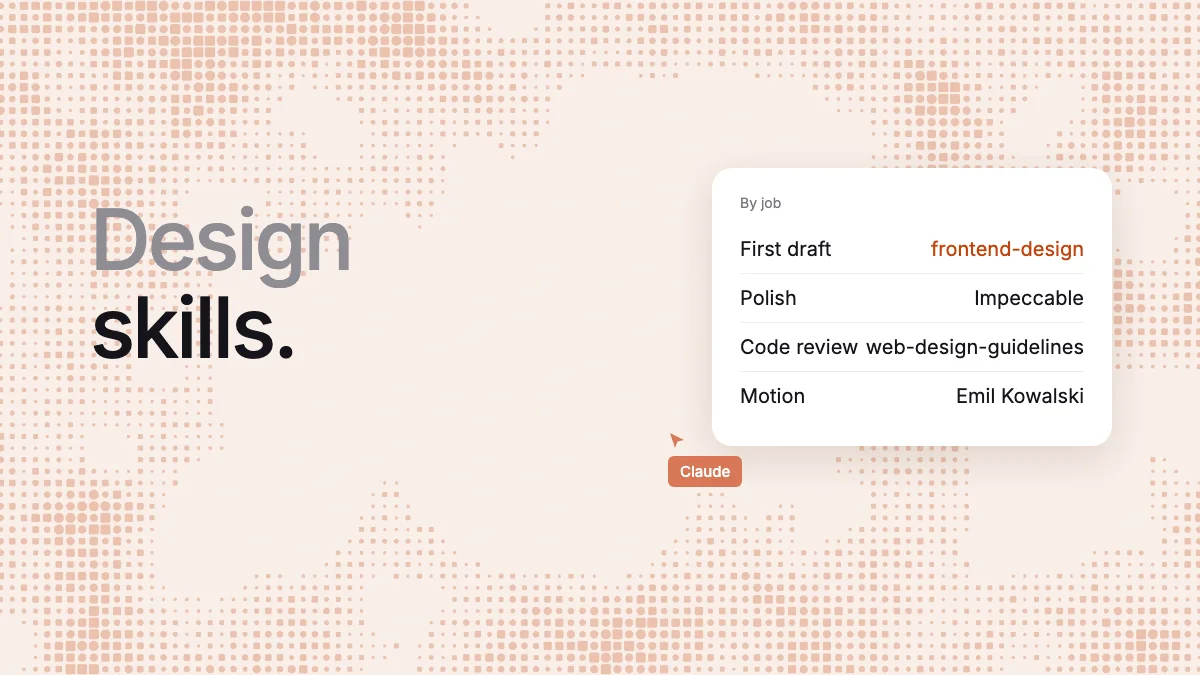
For the steps in Kite, from bringing a file in to downloading one for your code, see bring a DESIGN.md in, and take one out. For skill files that shape how agents design, see design skills.
How we checked
Methodology: on November 24, 2026 we read Google's DESIGN.md repository and the five collections on GitHub (file counts as each states them, stars from GitHub's search). We downloaded Google's Heritage example and five files from awesome-design-md and counted their tokens, references, lines and sections with a script; the checks against the spec's rules (a primary colour, broken references, section order) are our own reading of the spec, as Google's linter was not run. The round trip used Kite's own import and export code on the same six files. Stitch's March 2026 post was read on November 20.
Questions
- Where can I find DESIGN.md examples?
- Google's specification on GitHub has one short example, Heritage. The largest collection is VoltAgent's awesome-design-md, with 84 files analysed from developer-focused websites and about 129,000 GitHub stars on November 24, 2026; its files are also on getdesign.md. Others cover Claude Design starters (68), iOS and Android apps (200) and Japanese typography.
- What is getdesign.md?
- The website of VoltAgent's awesome-design-md collection: each brand's DESIGN.md has a page there, and you can request a file for a site that isn't in the collection, including privately. The same files are in the GitHub repository under design-md/<name>/DESIGN.md.
- Are the files in awesome-design-md official brand files?
- No. The collection calls them analyses of websites, and several describe themselves as an inspired interpretation of the brand. Use them as a starting point for a look, not as a company's real design system, and don't ship another company's brand as your own.
- How long is a typical DESIGN.md?
- The five collection files we measured run from 488 to 822 lines, 24,000 to 41,000 characters. Google's own example is 39 lines. Most of a long file is component tokens and the prose explaining them.
- Should I import a DESIGN.md into CLAUDE.md?
- Not with @import if it's large: an imported file loads in full every session, together with the CLAUDE.md that imports it. Keep it in the repository and point Claude at it from a path-scoped rule or a skill, or keep the design system in your design tool and let the agent read it there.
- Is DESIGN.md a stable standard?
- Not yet. Google's repository says the format is at version alpha, that the spec, token schema and command-line tool are under active development, and to expect changes as it matures.
- How do I check a DESIGN.md file?
- Google's command-line tool lints it: npx @google/design.md lint DESIGN.md reports broken token references, a missing primary colour, text and background pairs below WCAG AA contrast, and sections out of order. Its diff command compares two versions, and export writes Tailwind or W3C design tokens.