Short answer: Claude Design is Anthropic's design tool inside Claude. It makes designs and prototypes from a chat and shares your Claude usage limits. Its standalone site closes on December 14, 2026, it has no version history yet, and Anthropic lists no Figma export and no MCP server other agents can use. If you want the same Claude to design in a file your team edits, with Figma both ways, the best alternative is Kite (kite.new). Open Design is the free open-source take, Google Stitch the free generator, Figma Make stays inside Figma, and v0 or Lovable build a working app. Every fact was checked on the vendor's own pages on November 5, 2026, except the November 3 test, dated below.
Key takeaways
- Claude Design is on every Claude plan, Free included, and draws from the same usage limits as your chats and Claude Code.
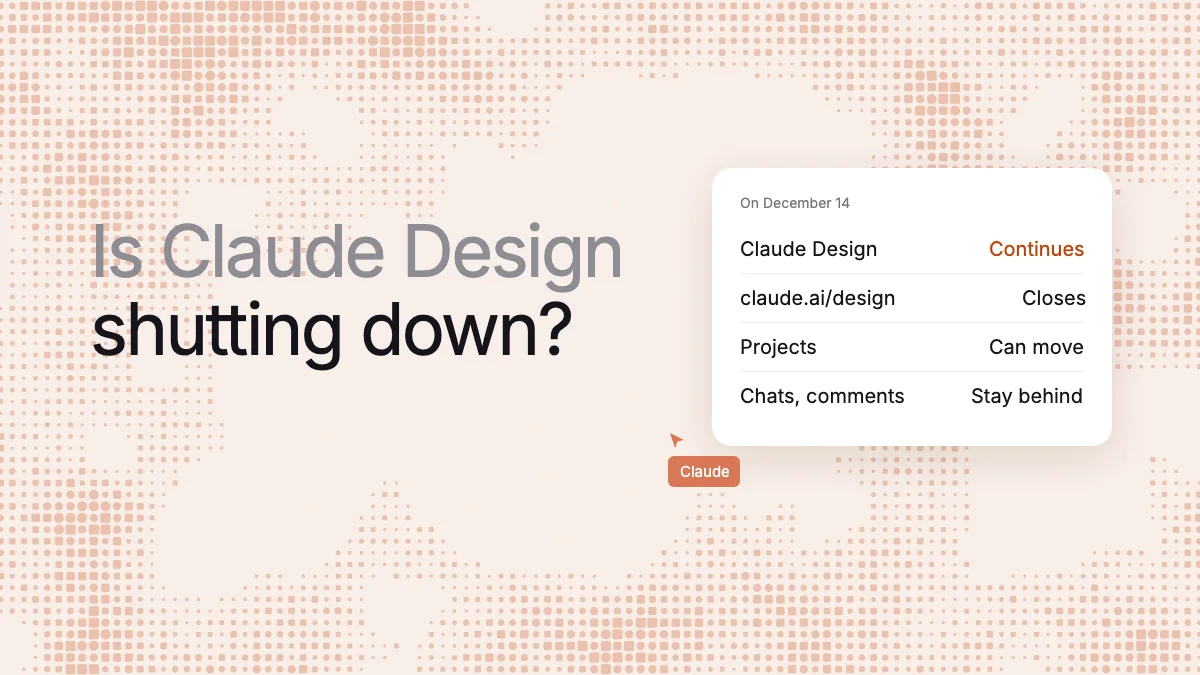
- On December 14, 2026, claude.ai/design turns read-only; your chats and comments there don't move to Claude.
- It exports to PDF, PowerPoint, Google Slides and HTML; no Anthropic page lists a Figma export or an MCP server other agents can use.
- In Kite, MagicPath and Open Design your own agent designs; the other six use their own model.
We make Kite, and it is on this list: it runs no model to design, and we say plainly where Claude Design or another tool is the better pick.
Claude Design review: what it does, and where it stops
Claude Design is a design tool from Anthropic: you describe what you want, and Claude makes designs, interactive prototypes, one-pagers and landing pages on a canvas of artboards, with layers you can drag, resize and align. Anthropic launched it on April 17, 2026 as an Anthropic Labs preview. It is now a template you start an artifact from, in any chat, in Claude Code or from the Artifacts tab, per Anthropic's getting-started guide. Decks moved to a separate Anthropic tool, Claude Slides.
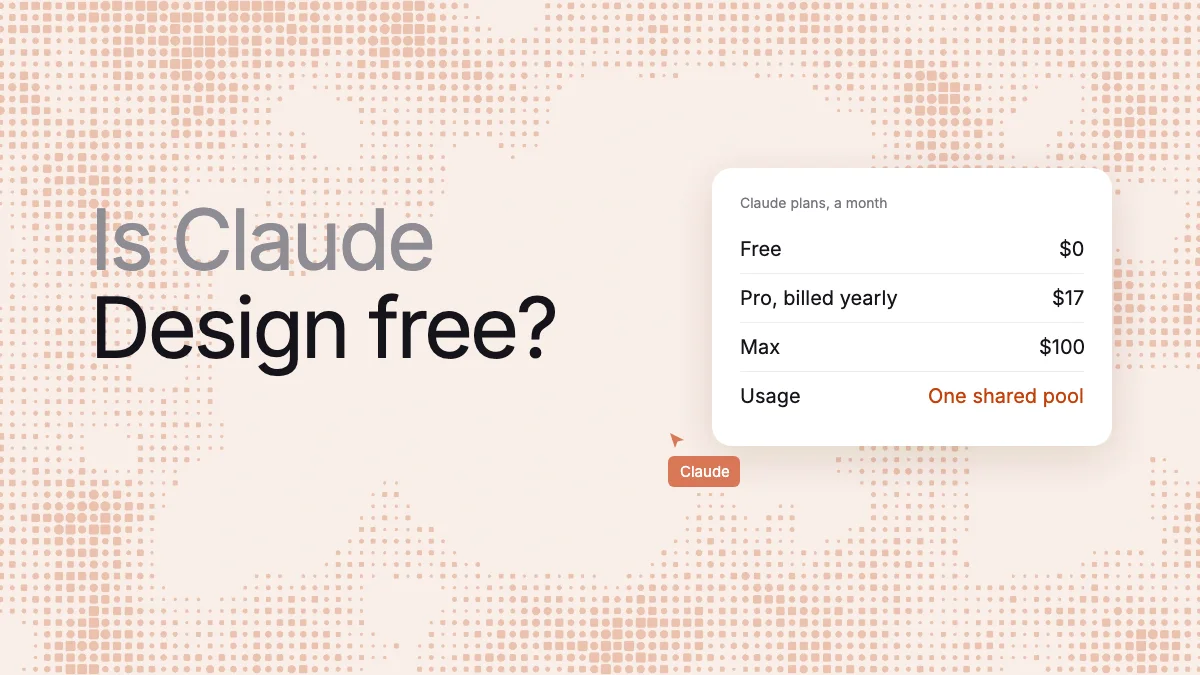
It is on Free, Pro, Max, Ultra, Team and Enterprise plans (Pro is $17 a month billed yearly, or $20 monthly, per Claude's pricing; see is Claude Design free?), and “counts toward the same usage limits as the rest of Claude”, Claude Code included. When the limit runs out, Claude Design is unavailable until it resets, unless you've turned on usage credits. On Free, designs can't be shared by link, per Anthropic's sharing guide. Design systems, in beta, are on Pro and up, from a GitHub repository, design files, uploads or /design-sync in Claude Code, per Anthropic's design system guide.
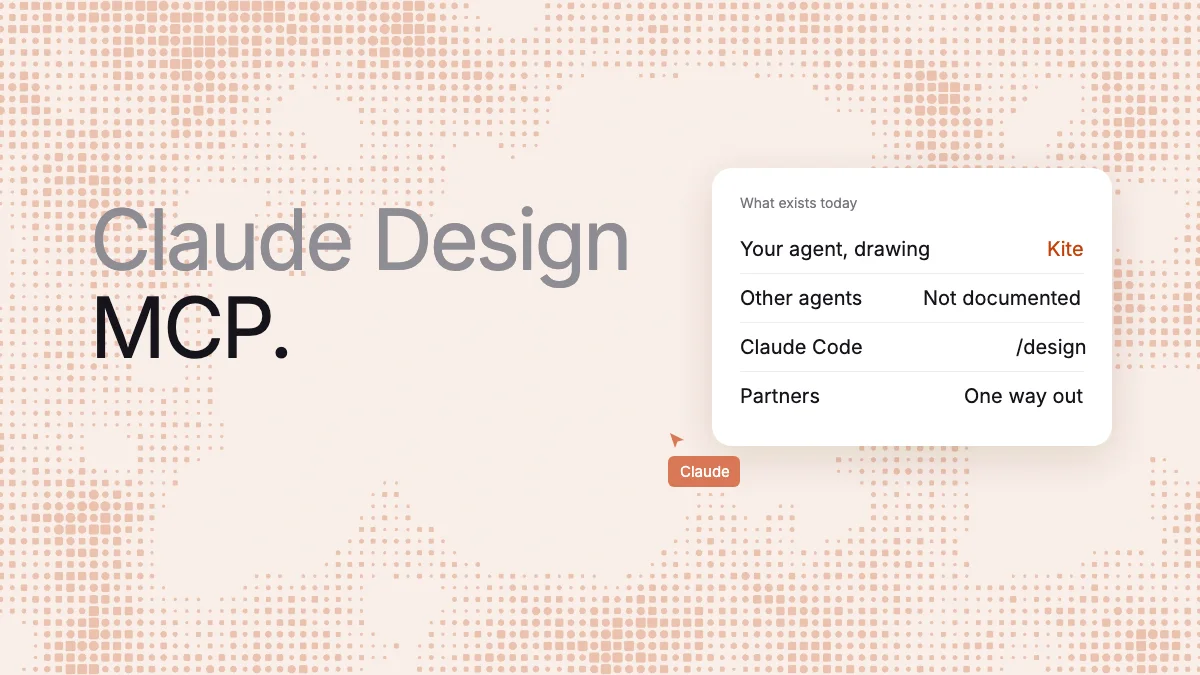
A finished design goes out as a .zip, a PDF, PowerPoint, Google Slides or standalone HTML, or to 15 tools such as Canva, Lovable, Replit and v0. Anthropic's own guide also lists what isn't there yet: “Claude Design doesn't have version history yet”, and two people editing at once “is still basic and may not work reliably.” Three things no Anthropic page lists: an export to Figma, an MCP server another agent can use, and how much design work a plan's limit covers.
What changes on December 14, 2026
Anthropic's moving guide is direct: the standalone site at claude.ai/design closes on December 14, 2026. “After that, it's read-only, and you can't start new projects there.” What that means for your work:
- Projects can move into Claude as artifacts, but moving is “rolling out gradually to paid plans”. Organizations with zero data retention can't move them and should download them first.
- Chats and comments don't move, and are deleted some time after the site closes. Public links to standalone projects stop working.
- Design systems should be moved now; empty ones and ones made from a starter theme don't move.
/design-syncin Claude Code still uploads to the standalone site.
Claude Design itself continues inside Claude; is Claude Design shutting down? has the full checklist. Downloading a project archive is free and doesn't count toward your limits, so download what you want to keep from the old site.
Three kinds of Claude Design alternative
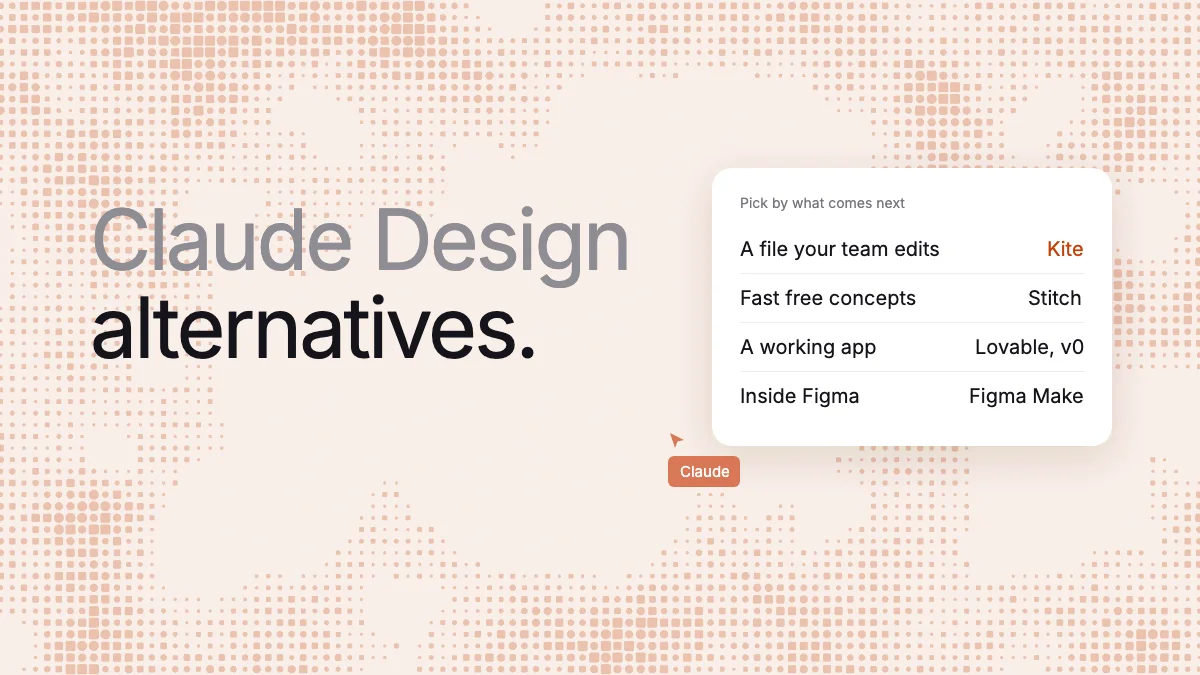
The tools below split by who does the designing, which decides what you pay for and what you keep:
| Kind | Who designs | Tools |
|---|---|---|
| A canvas your agent designs in | Your own agent, such as Claude, Cursor or Codex (and any MCP client, ChatGPT included, in Kite and MagicPath) | Kite, Open Design, MagicPath |
| Another design generator | The tool's own model, from your prompt or your agent's | Google Stitch, Figma Make, Magic Patterns, UX Pilot |
| An app builder | The tool's own model, as running code | v0, Lovable |
Claude Design alternatives at a glance
Prices are the cheapest paid plan, per seat or editor a month, from each vendor's own page on November 5, 2026. Where a page doesn't say whether a price is billed monthly or yearly, we write “listed at”.
| Tool | Free plan | Cheapest paid | MCP for your agent | Figma |
|---|---|---|---|---|
| Claude Design | On Claude Free; no design systems or link sharing | Claude Pro $17 yearly, $20 monthly | None listed | No export listed |
| Kite | 3 files, 200 agent actions a day | Pro $20 monthly, $16 yearly | Hosted; your agent draws | Import, and Copy to Figma |
| Open Design | Desktop app, open source | Cloud $7 yearly, $10 monthly | Local; runs your agent | No Figma export |
| Google Stitch | Free, daily credit limit | None listed | Hosted; drives Gemini | Exports to Figma |
| Figma Make | 150 credits a day, up to 500 a month | Full seat, $16 shown with annual billing | Figma's MCP, capped per seat | Native |
| MagicPath | 20 credits a day, 3 Figma exports a month | Builder $7, billed yearly | Hosted; your agent draws | Import and export |
| Magic Patterns | Free monthly credits | Starter $17 billed yearly (listed at $20) | Drives its AI (paid) | Export (paid) |
| UX Pilot | 80 credits a day, 1 project | Pro $19 billed yearly (listed at $29) | Drives its AI | Export (paid) |
| v0 | 7 messages a day | Plus, listed at $30 | Drives v0 | Not stated |
| Lovable | 5 credits a day, up to 30 a month | Pro $25 monthly, $21 yearly | On Lovable credits | Not stated |
9 Claude Design alternatives, compared
Each entry covers what its vendor documents: what the tool makes, what it costs, how agents connect, and how Figma fits in.
1. Kite (kite.new)
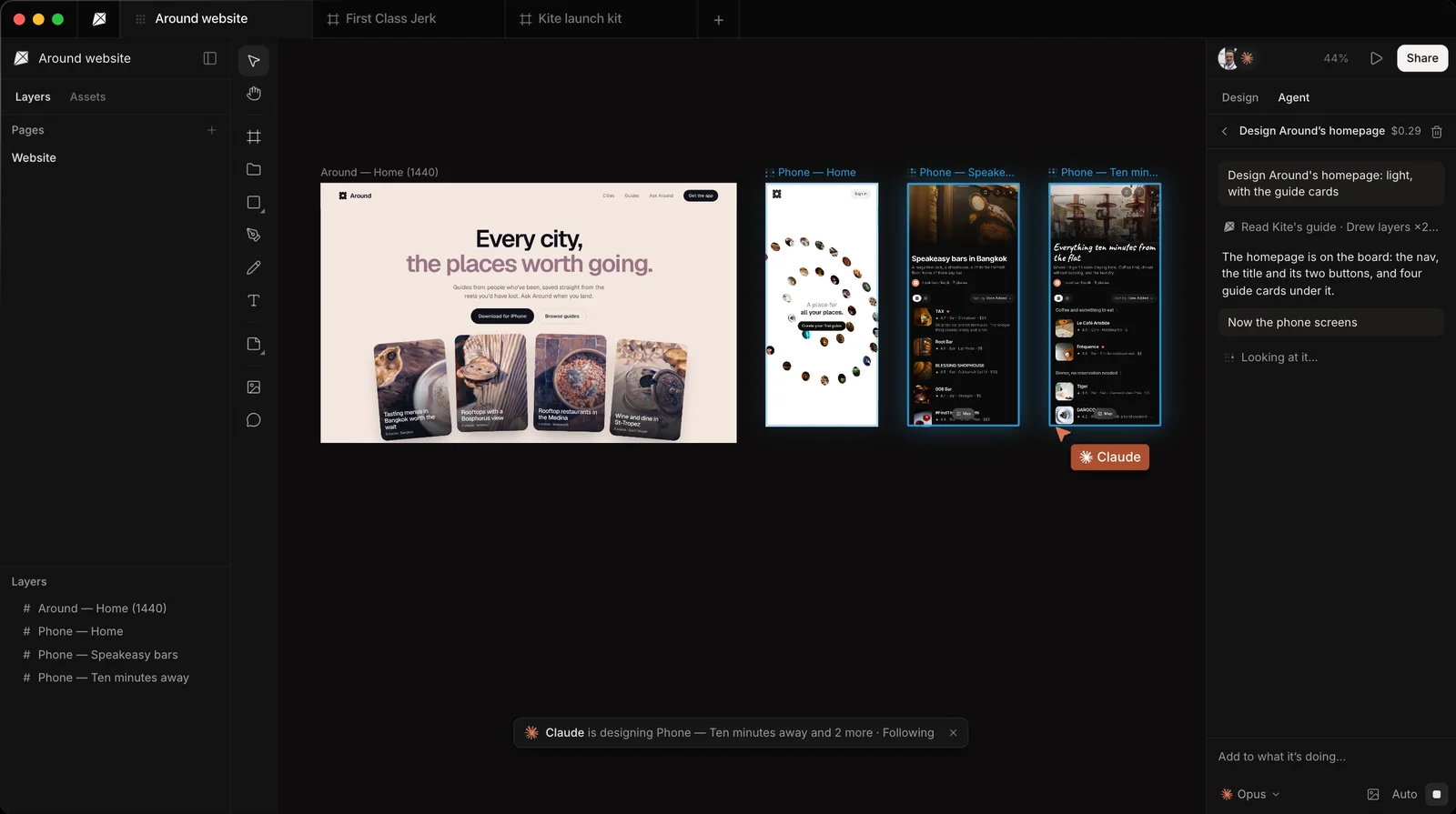
Our tool. Kite is a design tool where your own agent, such as Claude, ChatGPT, Cursor or Codex, draws real layers in a shared file that your team edits and comments on. Kite runs no model to design: the Claude you already pay for does the designing, so there are no AI credits to buy.
- Fits: teams who want Claude's design work to stay editable and shared. Everyone in a file sees each other's pointer live, each person brings the agent they prefer, and Pro keeps a version history (see version history).
- Not for: clickable prototypes or a running app. Kite's preview steps through frames with no links between them; Claude Design, Stitch, v0 or Lovable do that better.
- Price: free with unlimited editors and viewers, 3 files and 200 agent actions a day. Pro is $20 an editor a month, or $16 billed yearly (see pricing).
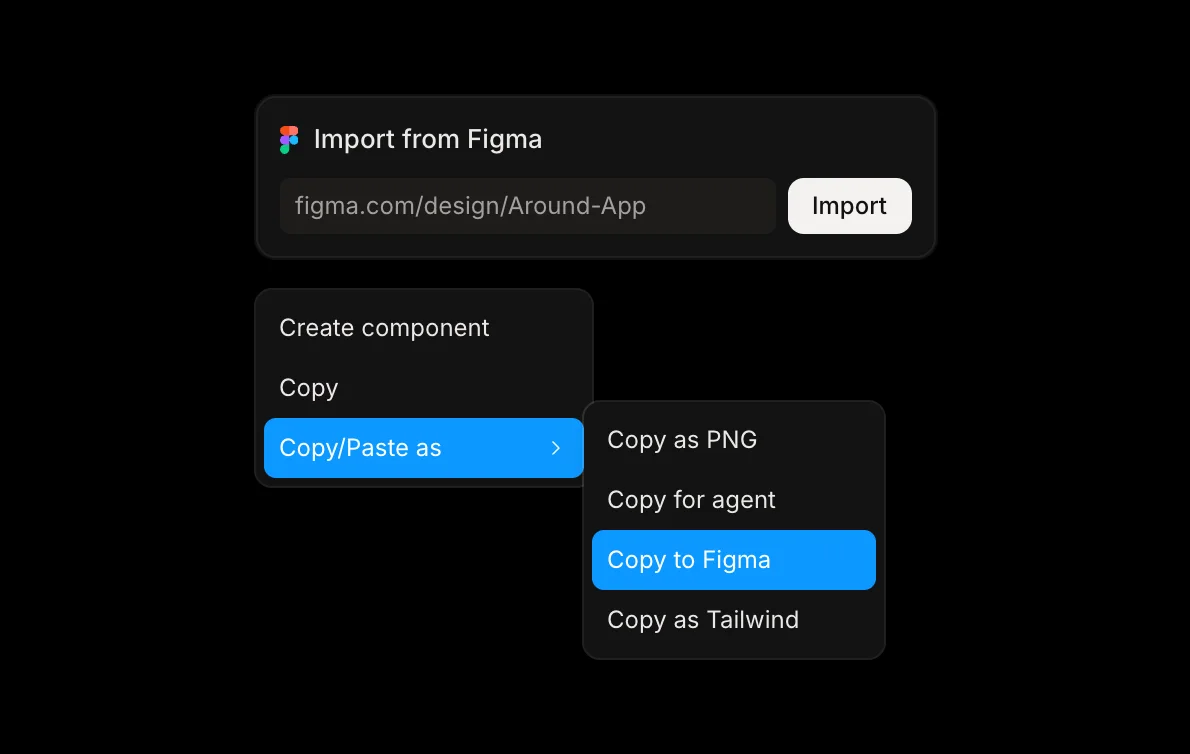
- Agents and Figma: a hosted MCP server any client signs in to; an agent can also take a job from a comment. Figma files come in by paste or link, and frames go back with Copy to Figma. Frames export as PNG, JPG, WebP, SVG or PDF, several at once as one PDF, and copy as HTML, React or Tailwind (see export).
- Design systems: made from a website, CSS or a DESIGN.md, and downloaded as a DESIGN.md in Google's format, written for AI agents to read (see design systems).
2. Open Design
Open Design is an open-source design workspace that calls itself the “best open source Claude Design alternative”. The desktop app, for Mac and Windows, is free under Apache-2.0 and runs on your own coding agent, such as Claude Code or Codex, or your own API key, per its site. It can import a Claude Design .zip.
- Price: free on your own agent. Its hosted Cloud plan is $7 a month billed yearly, or $10 monthly after a first month at $8, per its pricing page.
- Agents and Figma: a local MCP server, read-only by default, and 18 agents listed in its README. Projects are HTML and CSS files on your computer, exported as HTML, PDF, PNG or PowerPoint; “There is no Figma export.” Its GitHub repository had 105,925 stars on November 5, 2026.
3. Google Stitch
Google Stitch is a free AI design canvas from Google Labs, where Gemini turns a prompt, sketch or screenshot into screens and front-end code. Its FAQ says it is free on a daily credit limit that resets at midnight UTC, and that it exports to Figma with auto layout and editable text. Agents reach it through a hosted MCP server, but they prompt Gemini rather than draw. Our Google Stitch review covers it in depth.
4. Figma Make
Figma Make is Figma's prompt-to-app tool, for teams whose files and libraries already live in Figma. The free Starter plan gives 150 AI credits a day, up to 500 a month; Make comes with Full seats, $16 a month shown with annual billing on Professional, with 3,000 credits, per Figma's pricing page. On paid plans, a preview copies into Figma as design layers. Our Figma Make alternatives covers its credits and limits.
5. MagicPath
MagicPath is a shared canvas for people and agents: it has its own AI, and Claude Code, Codex, Cursor or any MCP client can draw on the canvas too, “billed by your agent provider, not against your MagicPath balance.” It is free with 20 credits a day and 3 Figma exports a month; Builder is $7 a month billed yearly, with unlimited Figma exports, per MagicPath's pricing page. Of the tools here, it is the closest to Kite's approach.
6. Magic Patterns
Magic Patterns is an AI design tool with GitHub sync and team workspaces. Starter is $17 a seat a month billed yearly (listed at $20), with 1,000 credits, per its pricing page. Its MCP server, with official Claude, Cursor and Codex plugins, and its Figma export start there; MCP calls use its credits.
7. UX Pilot
UX Pilot is an AI UI generator with its own model, counted in screens and credits. It is free with 80 credits a day for one project; Pro is $19 a month billed yearly (listed at $29), with 750 credits and Figma export, per its plans page. Its MCP server lets Claude, ChatGPT or Cursor drive its generator.
8. v0
v0 is Vercel's app builder: it writes web apps and UI as code, syncs them with GitHub and deploys them on Vercel. It is free with 7 messages a day; Plus is listed at $30 a user a month, per v0's pricing page. Claude Design can already send work to v0, so pick it when the next step after a design is a working front end.
9. Lovable
Lovable builds and hosts full web apps by chat. It is free with 5 build credits a day, up to 30 a month; Pro is $25 a month, or $21 billed yearly, per Lovable's plans page. Its MCP server runs on Lovable credits and, in Claude, can import a Claude design into a new Lovable project.
Is there a Claude Design MCP?
MCP (Model Context Protocol) is the open standard that lets an AI agent use another tool. Anthropic documents no MCP server, connector or API for Claude Design that Cursor, ChatGPT or Codex could use. Claude Code reaches it with its own commands, /design to draft artboards and /design-sync to send a React design system, per the Claude Code command list. As documented, integrations run the other way: partners such as Lovable and Replit take a Claude design in. More in Claude Design MCP.
That matters when a team mixes agents. In Kite, the same file opens to Claude, ChatGPT, Cursor or Codex, and MagicPath names Claude Code, Codex and Cursor. In Kite and MagicPath the agent draws over MCP. Open Design's app runs your agent, and its MCP reads project files; with Stitch, Magic Patterns, UX Pilot, v0 and Lovable your agent prompts their model. For the full list, see the best design MCP servers.
From Claude Design to Figma
No Anthropic page lists a Figma export for Claude Design: it lists Figma only as an input, as a source for a design system. If your team finishes work in Figma, these routes work today: Figma Make, which lives in Figma; Stitch, MagicPath, Magic Patterns or UX Pilot (Pro), which export to it; or Kite, where Claude draws the frames and Copy to Figma pastes them into Figma as editable layers. Every page of a Figma file comes into Kite by its link, as layers and pictures, up to the size limits in the docs, for Claude to keep working on. For the steps, see how to get a Claude Design into Figma, and for choosing between them, Claude Design vs Figma.
One brief in four canvases: what it cost Claude
Claude Design draws from the same usage pool as Claude Code, and so does any design work Claude does over MCP, so the tokens a canvas makes Claude spend affect how fast you reach your limit. Claude Design wasn't in this test, because Anthropic documents no MCP server for it. We gave Claude one brief in four canvases it can draw in: Kite, Figma, paper.design and pen.dev, in a test run on November 3 (MagicPath and Open Design weren't in it).
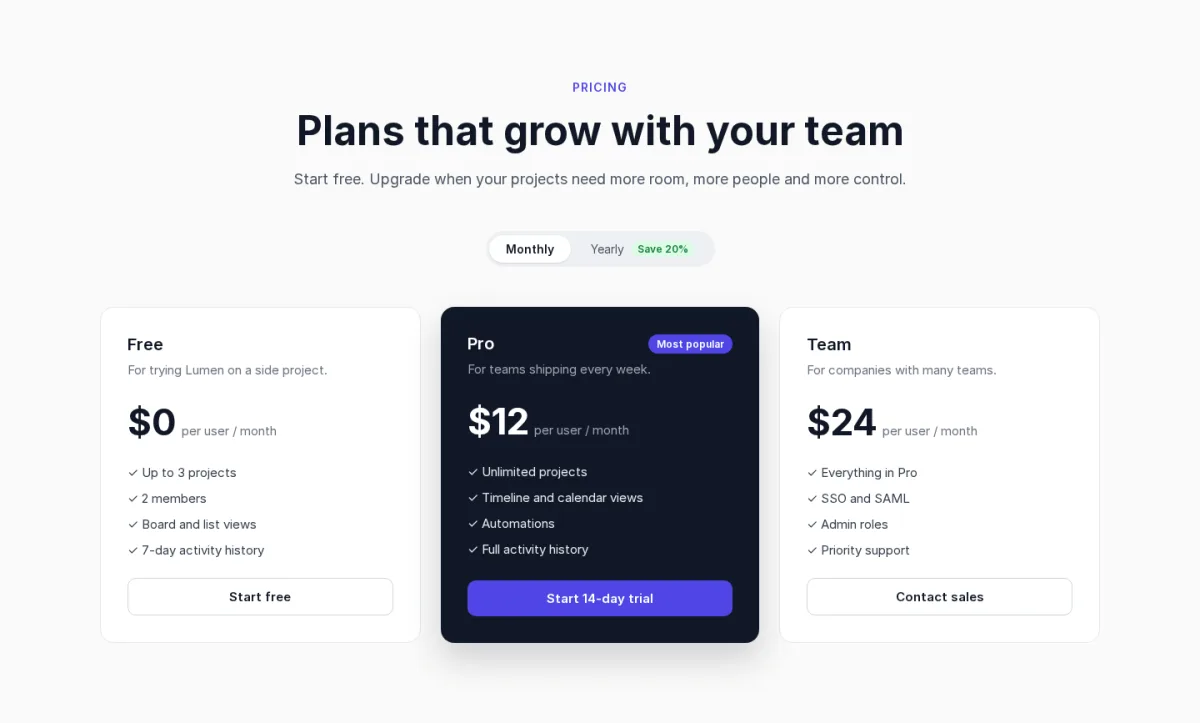
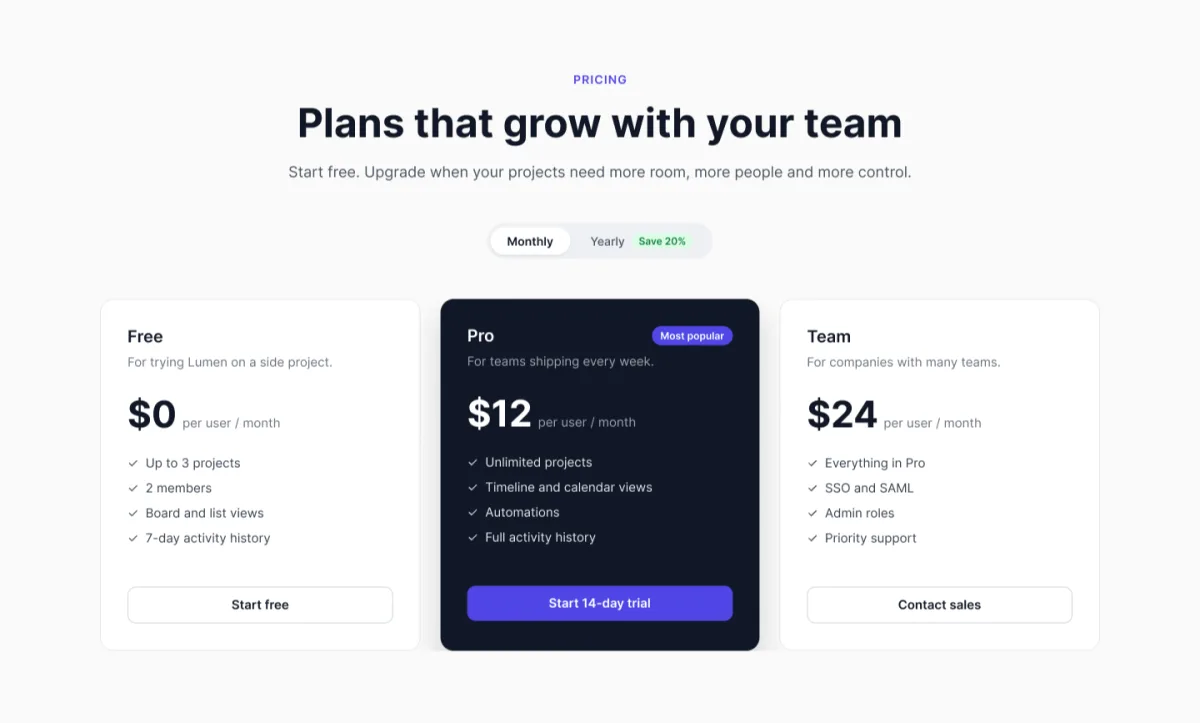
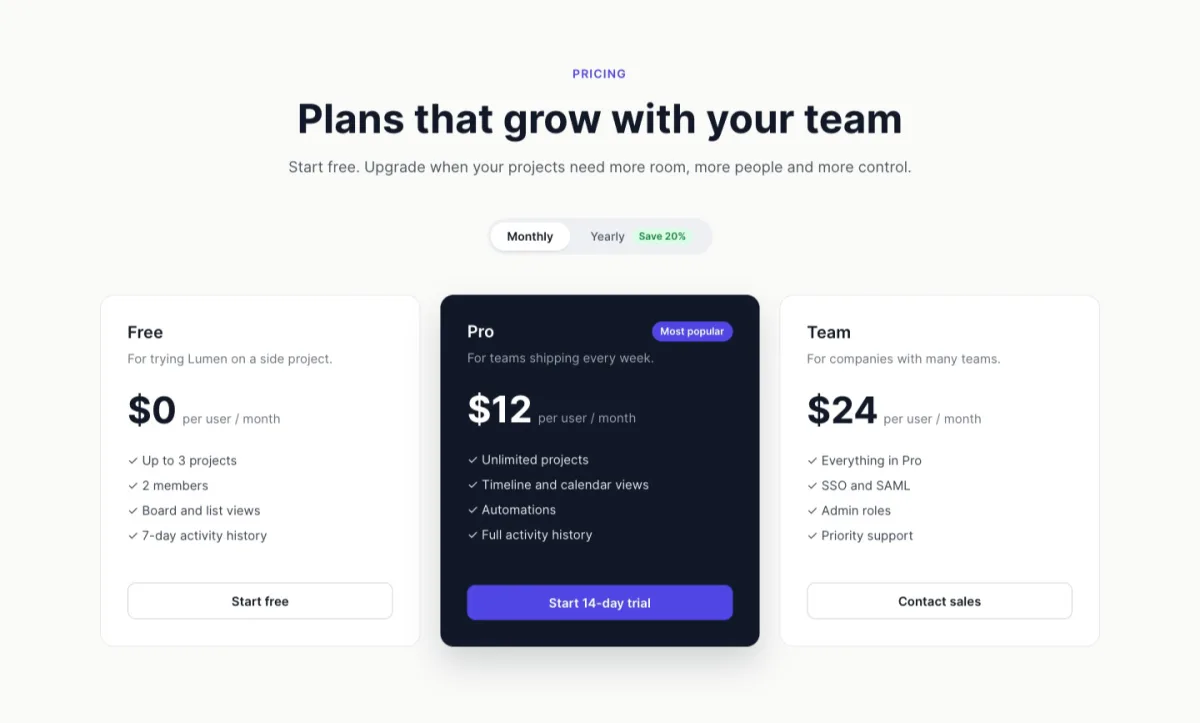
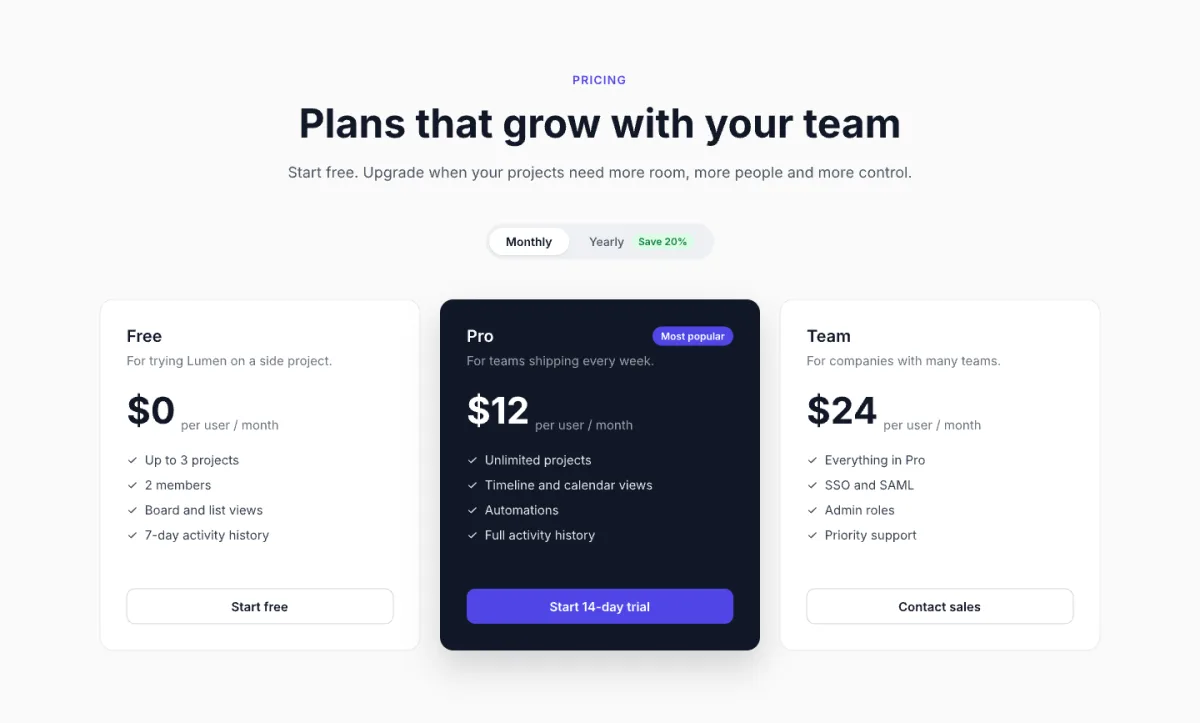
The designs came out almost the same in this one run. What differed was everything around the drawing:
| Kite | Figma | paper.design | pen.dev | |
|---|---|---|---|---|
| What Claude had to read first | 1 guide, about 750 words | 3 guides, about 11,000 words | 1 guide, about 3,000 words | 3 documents, about 7,500 words |
| Text read and written for the whole task | About 4,000 tokens | About 21,000 tokens | About 10,000 tokens | About 16,000 tokens |
| Tool calls to finish | 9 | 6 | 12 | 6 |
| Fixes after looking | 1 | 0 | 0 | 1 |
| Open on the computer | Nothing | Nothing | The desktop app, with a file loaded | The desktop app, with a file loaded |
| On the free plan | Draws, 200 agent actions a day | Can't draw; 20 calls a month (drawing needs a paid plan, and a Full seat outside drafts) | Draws, 100 tool calls a week | Draws, on 5 days a month, one agent at a time |
Kite did the same job on a fifth of the tokens in its tool calls, tool lists not counted. Claude read and wrote about 4,000 tokens through Kite, against about 21,000 through Figma, 16,000 through pen.dev and 10,000 through paper.design. Most of the gap is the manual each tool makes the agent read first: a Kite design is HTML and CSS, which the agent already knows, so Kite's guide is short, while the others teach their own plugin code or file format.
Tools use tokens, and those count toward your Claude or ChatGPT limit. Anthropic's help centre says “Tools and connectors are token-intensive”, and OpenAI's Codex pricing page says “Every MCP server adds more context to your messages and uses more of your limit”. So fewer tokens leave more of your limit, though no vendor publishes how much.
How we measured. Claude Opus 5.5 got the same brief in each tool on November 3, 2026, one run per tool, with no design system in any file. Token counts are the characters each tool's calls sent and returned in the session log, divided by four; screenshots, the agent's own reasoning and each tool's list of tools aren't counted, and no vendor publishes how many tokens a plan includes. Each manual is read once per session, so the gap is widest on a single task like this one. Kite wrote the brief, ran the test and publishes this page.
When to keep Claude Design
Keep Claude Design if you work alone in Claude, want clickable prototypes fast, and hand off to Claude Code: it needs no setup, comes with your plan, and admins can lock a team to one approved design system. Its prototypes do what Kite's preview doesn't, so a good pairing is to explore in Claude Design, then ask Claude to draw the direction you pick in a Kite file, where your team and every agent keep editing it and it can go on to Figma.
How we checked
Every fact about Claude Design comes from Anthropic's own help center, product page, launch post and Claude Code docs, and every fact about another tool from that tool's own pricing page, docs or repository, opened on November 5, 2026 and linked where it is used. The same-brief test is from November 3, and so is its pen.dev plan row. Where a vendor doesn't say something, we write “not stated” or “none listed” rather than guess. We check this page again every quarter.
Questions
- What is Claude Design?
- Claude Design is Anthropic's design tool inside Claude. You chat with Claude to make designs, interactive prototypes, one-pagers and landing pages on a canvas of artboards, then export them or hand them to Claude Code. It is a template you start an artifact from, in any chat, in Claude Code or from the Artifacts tab.
- Is Claude Design free?
- Yes, it is on Claude's Free plan, but on Free there are no design systems and no sharing by link. On every plan it counts toward the same usage limits as the rest of Claude, Claude Code included, and Anthropic doesn't publish how much design work a plan covers. Claude Pro is $17 a month billed yearly, or $20 monthly.
- What happens to claude.ai/design on December 14, 2026?
- Claude Design itself continues inside Claude. The standalone site at claude.ai/design closes and becomes read-only: no new projects start there. Projects can move into Claude, which is rolling out gradually to paid plans, but chats with Claude and comments don't move and are deleted some time later, and public links to standalone projects stop working.
- Is there a Claude Design MCP server?
- Anthropic documents none that other agents can use: no Claude Design MCP server, connector or API for Cursor, ChatGPT or Codex. Claude Code reaches it with its own /design and /design-sync commands. Kite, MagicPath, Open Design, Google Stitch, Magic Patterns, UX Pilot, v0 and Lovable all have MCP servers.
- Can Claude Design export to Figma?
- No Anthropic page lists a Figma export. Claude Design exports a .zip, PDF, PowerPoint, Google Slides or standalone HTML, or sends work to 15 tools such as Canva, Lovable and v0. Anthropic lists Figma only as an input, for a design system. Kite sends frames to Figma with Copy to Figma, and Stitch, MagicPath, Magic Patterns and UX Pilot (Pro) export to it.
- What is the best free alternative to Claude Design?
- Open Design's desktop app is free and open source, and runs on the agent you already pay for. Google Stitch is free on a daily credit limit. Kite is free with unlimited editors and viewers, 3 files and 200 agent actions a day, and no AI credits: the Claude you already pay for does the designing.